
If you’ve ever stood in your living room staring at scuffed walls and a tired ceiling, the next question is almost always the same: what’s this going to cost me?
I get that question every week from homeowners across Atlantic and Cape May counties, and the honest answer has more layers than most online calculators show.
I’m John, the owner of Mackenzie Contracting LLC (NJ HIC #13VH12847300). I’ve been quoting and completing interior painting jobs across South Jersey for years, and what follows is the same straight-talk pricing breakdown I’d give you over the kitchen counter — without the marketing fog. Let’s get into it.
How Much Does Interior Painting Cost in NJ? (Quick Answer)
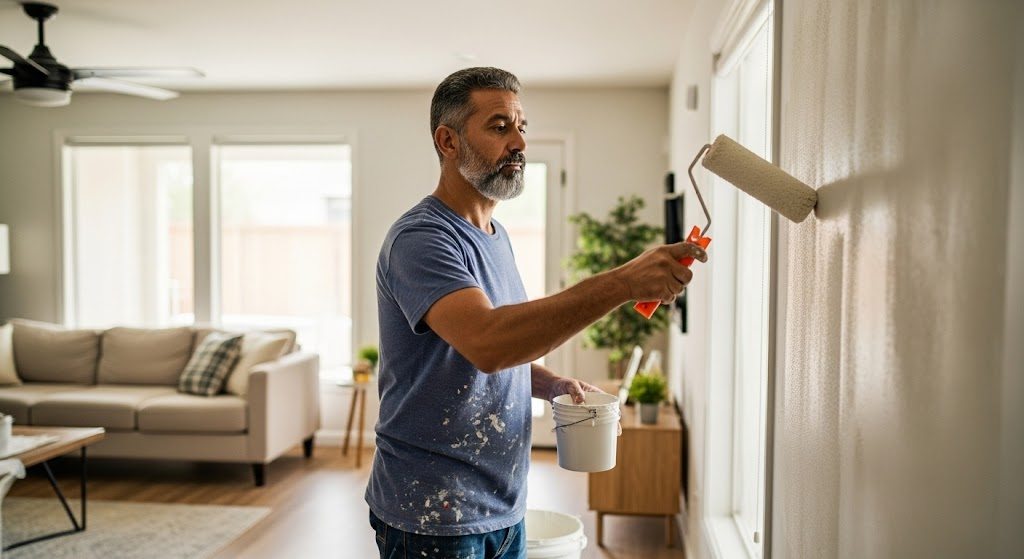
Most New Jersey homeowners pay between $2.00 and $6.00 per square foot of wall surface for professional interior painting, or roughly $300 to $1,500 per room.
A full interior repaint of a 2,000-square-foot home in South Jersey usually lands somewhere in the $3,500 to $7,500 range, with bigger or more detailed homes climbing past $10,000 once trim, ceilings, and color changes pile up.
These numbers hold steady across most of Atlantic, Cape May, Ocean, and Burlington counties. The price moves up or down based on prep work, paint grade, ceiling height, and how many coats the walls actually need.
| Project | Average Cost (NJ) | Typical Range |
|---|---|---|
| One bedroom (12×12) | $550 | $400 – $700 |
| Living room | $1,000 | $700 – $1,500 |
| Kitchen (walls only) | $850 | $600 – $1,200 |
| Bathroom | $400 | $250 – $550 |
| Whole-house interior (2,000 sq ft) | $5,200 | $3,500 – $7,500 |
| Kitchen cabinet painting | $2,800 | $1,500 – $4,500 |
Interior Painting Cost Per Square Foot, Per Room, and Per Hour in NJ
Painters in New Jersey quote three different ways, and knowing all three helps you read an estimate without getting played.
Cost Per Square Foot of Wall Surface in NJ
Interior painting in NJ runs $2.00 to $6.00 per square foot of wall surface area. That’s wall, not floor — a common mix-up. A standard 12×12 bedroom with 8-foot ceilings has about 384 square feet of paintable wall surface once you subtract doors and windows.
The bottom of that range — around $2.00 — applies when the walls are sound, the color is staying close, and only two coats are needed. The top — $5.00 to $6.00 — shows up on heavy-prep jobs: water-stained ceilings, peeling wallpaper, deep nail-hole damage, or a jump from charcoal gray to bright white.
Ceilings tack on another $1.00 to $2.00 per square foot, and trim adds $1.00 to $3.00 per linear foot depending on profile detail.
Cost Per Room — Standard NJ Pricing
When a contractor quotes by the room, the figure usually bundles walls, two coats, basic patching, and edge cutting into one flat price. Here’s where typical NJ pricing falls:
Add the ceiling? Expect another $150 to $400 per room. Add trim, doors, and baseboards? Another $200 to $600 depending on how much linear footage you’re dealing with.
- Standard bedroom (10×10 to 12×12): $300 – $700
- Master bedroom (14×16): $700 – $1,200
- Living room or family room: $700 – $1,500
- Kitchen walls: $600 – $1,200
- Standard bathroom: $250 – $550
- Hallway or stairwell: $400 – $1,000
Hourly Painter Rates in New Jersey
NJ painters charge $40 to $75 per hour for labor alone, with material billed separately. Smaller jobs — touch-ups, an accent wall, a single powder room — often get quoted hourly because the setup is faster than the painting itself.
A licensed painting contractor carrying liability insurance and an NJ HIC registration usually sits in the $55 to $75 range. Day-rate painters operating without a license sometimes quote $30 to $40, but you trade away the consumer protections built into New Jersey’s Home Improvement Contractor law.
Interior Painting Cost by Room Type in NJ
Every room paints differently. Bathrooms have moisture; kitchens have grease; ceilings have gravity working against you. Here’s what each space typically costs in South Jersey, walls and ceiling included unless noted otherwise.
Bedroom Painting Cost
A standard bedroom in NJ paints for $400 to $700. Master bedrooms with vaulted ceilings, walk-in closets, or built-ins push that to $900 or even $1,400. Most bedroom jobs wrap up in a single day with two coats of scrubbable eggshell — the workhorse finish for living areas.
Living Room and Family Room Painting Cost
Living rooms cost $700 to $1,500 in most South Jersey homes. The price climbs because the rooms are bigger, the ceilings are often higher, and there’s usually more trim to cut around — fireplaces, built-in shelving, crown molding, and chair rail.
Open-concept layouts that flow into the dining room get priced as one combined space.
Kitchen Interior Painting Cost (and Cabinet Add-On)
Painting just the kitchen walls runs $600 to $1,200. Painting kitchen cabinets is its own project — and it’s the costliest specialty job in interior work.
Cabinet painting in NJ averages $1,500 to $4,500 depending on the door count, whether the boxes get sprayed or brushed, and whether you want a furniture-grade enamel finish. Done right, it’s still half the cost of replacement.
Bathroom Painting Cost
A standard bathroom paints for $250 to $550. Master baths with double vanities, soaking tubs, and tile surrounds reach $700 or more. Bathrooms always get semi-gloss because the finish has to handle steam, splashes, and frequent wipe-downs without losing its sheen.
Hallways, Stairwells, and Entryways
Hallways and entryways cost $400 to $1,000, but two-story stairwells can hit $1,500 to $2,500 all on their own. The reason is straightforward: scaffolding or extension ladders take time to set up safely, and the upper walls are tough to reach with rollers.
Insurance-carrying contractors price for the safety setup honestly; the cheap quotes you’ll see usually skip it.
Basement and Finished Basement Painting Cost
Finished basements paint for $1,200 to $3,500 depending on square footage. Unfinished basement walls — concrete or block — cost more per square foot than drywall because they need a masonry primer or alkyd block filler before any color goes on.
Skipping that step is exactly how paint peels off basement walls within a year.
Whole-House Interior Painting Cost
A complete interior repaint by square footage typically prices like this in NJ:
| Home Size | Walls Only | Walls + Ceilings + Trim |
|---|---|---|
| 1,500 sq ft | $2,500 – $4,500 | $4,000 – $7,000 |
| 2,000 sq ft | $3,500 – $6,000 | $5,500 – $9,000 |
| 2,500 sq ft | $4,500 – $7,500 | $7,000 – $11,000 |
| 3,000+ sq ft | $5,500 – $9,500 | $8,500 – $14,000+ |
9 Factors That Determine Interior Painting Cost in NJ
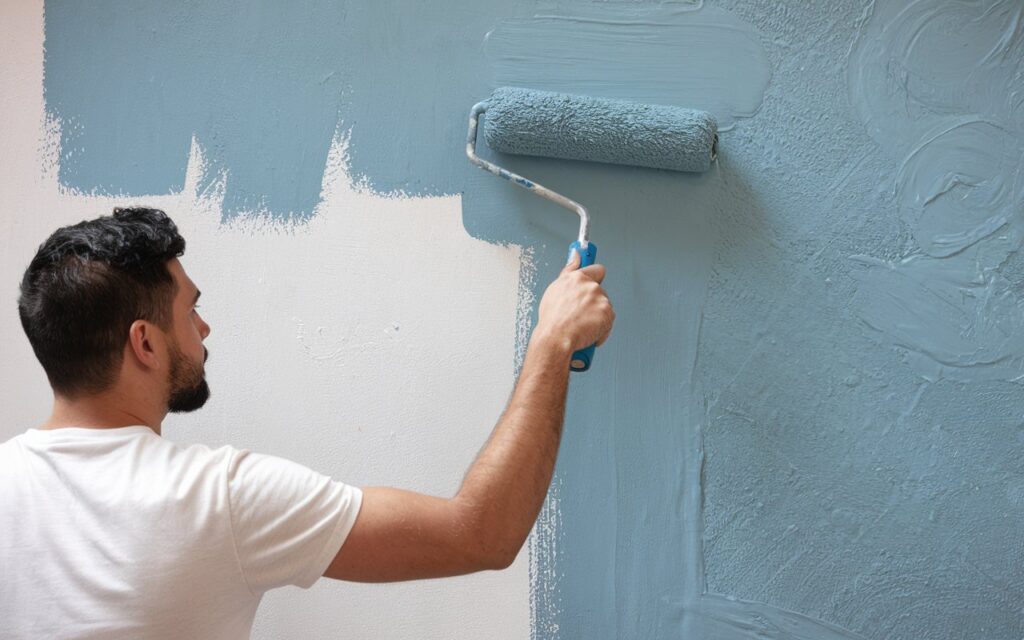
Nine specific variables drive the price up or down on every interior painting estimate I write.
1. Square Footage and Wall Surface Area
Bigger walls need more paint and more labor hours. A 1,500-square-foot ranch and a 3,000-square-foot colonial don’t paint for the same price even with identical paint, because the second house has roughly twice the wall surface.
2. Surface Condition and Prep Work Required
Prep is 80% of the job, and it’s the single biggest swing factor in a quote. Smooth walls in good shape need only spot-patching and a light sand. Walls with peeling paint, water stains, smoke damage, old wallpaper glue, or hairline cracks need hours of repair work before the first drop of paint goes on. Heavy prep adds 20% to 50% to a job’s labor cost.
3. Paint Quality Tier (Builder, Mid-Grade, Premium)
Paint comes in three real tiers: builder-grade ($20–$35/gallon), mid-grade ($40–$55/gallon), and premium ($60–$95/gallon). Premium paint covers in fewer coats, hides better, and lasts longer — so the gallon costs more, but the job often takes less time and fewer cans.
4. Number of Coats Applied
Two finish coats is the honest standard on every interior wall, regardless of what the can label promises. Three coats are needed when you’re going dramatically lighter over dark, dark over white, or covering raw drywall that received only a single primer coat. A contractor promising a “one-coat finish” on a previously unpainted wall is shaving the corners that show up six months later.
5. Color Change Severity
Repainting beige walls beige is a different job than turning navy walls into cream. Severe color shifts often require an extra coat of tinted primer plus two finish coats — that’s three coats total. Plan on 15% to 25% more for a high-contrast color change.
6. Ceiling Height (8 ft, 9 ft, or Vaulted)
Standard 8-foot ceilings are baseline pricing. Nine-foot ceilings add roughly 10% to 15% because the extra wall surface and ladder work compounds. Vaulted, cathedral, or two-story ceilings can add 30% to 60% thanks to scaffolding, cut-in time, and safety equipment.
7. Wall, Ceiling, and Trim Combinations
A “walls only” quote is cheaper than “walls + ceiling + trim + doors.” The math: trim work is tedious, requires precision brush technique, and uses a different paint product (semi-gloss or gloss) than wall paint. Asking for the full package in one visit usually saves money versus phasing the work later.
8. Furniture Moving and Floor Protection
Moving heavy furniture, removing wall-mounted TVs, taking down curtains, and laying drop cloths takes labor hours. Some painters fold this into the base price; others charge separately. Empty rooms paint 30% faster than fully furnished ones.
9. Painter Experience and Licensing Status
A licensed, insured contractor (registered as an NJ HIC) costs more than a guy with a roller and a truck. The price gap reflects insurance, training, warranty coverage, and consumer protection under New Jersey’s contractor licensing law. The cheapest quote rarely turns into the cheapest finished job.
NJ-Specific Factors That Affect Interior Painting Cost
Most national painting cost guides quote averages from Texas or Ohio. New Jersey paints differently, and South Jersey paints differently from North Jersey. Three regional factors push NJ costs above the national mean.
Coastal Climate and Humidity in South Jersey
Atlantic and Cape May counties sit on the coast, which means humidity hovers between 60% and 80% during much of the painting season. High humidity slows paint cure time, encourages drips and runs, and forces longer wait periods between coats.
Professional painters factor this into scheduling — a job that takes three days inland might need four days near the shore.
Salt air also matters for any room facing the bay or ocean. Even on interior walls, salt residue can sneak in through windows and HVAC and cause adhesion problems if surfaces aren’t washed before priming.
Older Homes and Lead Paint Testing (Pre-1978 Stock)
A lot of South Jersey housing stock — especially in Atlantic City, Ventnor, Margate, Ocean City, and the older parts of Egg Harbor Township — predates 1978.
That’s significant because the federal EPA Renovation, Repair, and Painting Rule (RRP) requires lead-safe work practices on any home built before 1978 when a contractor disturbs more than six square feet of paint per room.
Lead paint testing typically adds $100 to $400 to the project, and lead-safe containment can add $300 to $1,200 depending on scope.
A licensed contractor will bring this up on their own. If a quote on a 1955 Margate beach cottage doesn’t mention lead-safe work, that’s a warning flag.
Labor Rates Across Atlantic, Cape May, Ocean, and Burlington Counties
Painting labor in shore communities runs about 10% to 20% higher than inland New Jersey. Demand spikes from May through September because rental owners, second-home owners, and short-term hosts all want their properties refreshed before peak season.
Booking a winter or early spring repaint dodges that premium.
Cost of Specialty Interior Painting Projects
Some painting projects don’t fit the per-room pricing model. They’re priced by detail, not square footage.
Cabinet Painting Cost
Kitchen cabinet painting averages $1,500 to $4,500 in NJ. A small kitchen with 10 doors might come in at $1,200; a large kitchen with 30+ doors and drawer fronts can pass $5,000.
The labor is intensive: degreasing, deglossing, taping, removing doors, applying a bonding primer, and finishing with two coats of furniture-grade enamel. Done right, painted cabinets last 8 to 12 years.
Trim, Baseboard, and Door Frame Painting Cost
Trim painting alone runs $1.00 to $3.00 per linear foot. A standard whole-house trim repaint usually adds $1,200 to $3,500 to a wall-painting project. Painted doors cost $75 to $150 per door depending on size and detail — bifold and panel doors take longer than slab doors.
Ceiling-Only Painting Cost
If walls are fine but the ceilings are stained or tired, expect $1.00 to $2.00 per square foot. A 200-square-foot bedroom ceiling lands around $200 to $400. Water stains require shellac-based primer before topcoat — standard latex primer cannot block tannin or smoke bleed-through reliably.
Accent Wall and Feature Wall Cost
A single accent wall in NJ runs $150 to $400. The price seems high for one wall, but the setup time — taping, drop cloths, edge-cutting, two coats — doesn’t shrink because you’re only painting 15% of the room.
Rental Turnover Painting Cost (Atlantic County Landlords)
Landlords in Atlantic County usually budget $800 to $2,500 for a full rental turnover repaint, depending on unit size.
The standard spec is scrubbable eggshell for living areas and semi-gloss for kitchens and bathrooms — durable finishes that survive tenant cleaning. Same-week scheduling matters here because every empty week is lost rent.
Paint Cost — Sheen, Brand, and Quality Tier
Paint material is roughly 15% to 20% of the total project cost on a labor-included quote. The bigger your home, the more this percentage matters.
How Paint Sheen Affects Cost
Sheen levels run from flat to high-gloss, and each one has its own price and use case:
- Flat / Matte: Cheapest gallon. Hides imperfections. Use on ceilings and low-traffic walls.
- Eggshell: Slight sheen. The default for living rooms and bedrooms. Tolerates gentle wiping.
- Satin: Tougher than eggshell. Good for hallways, kids' rooms, and high-contact walls.
- Semi-Gloss: Moisture-resistant. Required spec for trim, doors, kitchens, and bathrooms.
- Gloss / High-Gloss: Hardest finish. Used on doors, accent surfaces, and trim where maximum durability matters.
Higher sheens generally cost a few dollars more per gallon than flat, and they show prep imperfections more clearly — which means they need better surface prep, which adds labor.
Builder-Grade vs Mid-Grade vs Premium Paint
| Tier | Price Per Gallon | Lifespan | Coverage |
|---|---|---|---|
| Builder-grade | $20 – $35 | 3 – 5 years | Fair |
| Mid-grade | $40 – $55 | 5 – 8 years | Good |
| Premium | $60 – $95 | 8 – 15 years | Excellent |
Premium paint usually covers in two coats where builder-grade needs three, so the per-gallon premium can pay itself back in saved labor.
Recommended Paint Brands for NJ Homes
The brands that hold up well in South Jersey humidity and tenant-grade durability include Sherwin-Williams Emerald and SuperPaint, Benjamin Moore Regal Select and Aura, and Behr Marquee and Ultra.
Each has its strengths — Sherwin-Williams Emerald is excellent in moisture-prone rooms, Benjamin Moore Aura covers in fewer coats, and Behr Marquee gives premium performance at a slightly lower price point.
Hidden Interior Painting Costs to Verify Before Signing
The biggest gap between a $4,000 quote and an $8,000 quote isn’t always the paint quality. Often, it’s what’s missing from the cheaper estimate.
Drywall Repair and Wall Patching
Small nail holes get filled in normal prep. But cracks from settling, dents from furniture, drywall tape failure, or holes left from removed shelving need actual drywall repair.
If your walls have visible damage, ask for drywall repair as a separate line item in the quote. Done as part of the same project, it’s usually cheaper than calling a separate drywall contractor afterward.
Wallpaper Removal Cost
Wallpaper removal is a labor-heavy add-on. Expect $1.00 to $5.00 per square foot depending on the number of layers, glue type, and whether the wallpaper was hung over primed or unprimed drywall.
Old paper hung directly on raw drywall is the worst-case scenario — sometimes the only fix is skim-coating the entire wall after removal.
Lead Paint Testing for Pre-1978 Homes
If your home was built before 1978 and the contractor isn’t asking about lead, that’s a problem. A lead paint test costs $30 to $100 for swab kits or $200 to $500 for a certified inspection. EPA-mandated lead-safe work practices add containment costs but protect everyone in the home.
Two-Coat Coverage Confirmation
Read the line that says how many coats are included. Two finish coats is the honest standard on virtually every interior surface. A quote that says “one coat to refresh” is either underpriced or under-specified — and the difference shows up in patchy coverage and visible roller marks within a year.
Disposal, Cleanup, and Touch-Up Paint
Quality contractors leave you with the cleanup done and a labeled can of leftover paint for future touch-ups. Cheap quotes sometimes skip the disposal of empty paint cans, drop cloths, or removed wallpaper — and that becomes your problem at the curb.
DIY vs Hiring an NJ Painter — True Cost Comparison
Painting yourself is one of the few home projects where the skill ceiling is high but the entry barrier is low. The numbers tell the real story.
DIY Material and Equipment Costs
For a single 12×12 bedroom, DIY materials add up to about:
- 2 gallons of mid-grade paint: $90
- Quart of primer: $20
- Brushes, rollers, roller frames: $40
- Drop cloths, painter's tape, plastic sheeting: $30
- Patching compound, sandpaper, caulk: $25
- Roller pole, paint tray, liners: $25
Total DIY material cost: about $230 for one room. Compare that to a $550 professional quote, and you’re “saving” $320 — minus your time.
Time Investment and Hidden Costs of Painting Yourself
A professional crew finishes a 12×12 bedroom in 4 to 6 hours including prep and cleanup. The same room takes most DIY homeowners 12 to 20 hours spread across a weekend, especially the first time.
Add the cost of redoing edges that bled, filling spots that flashed, and buying extra paint because the first coat showed through, and the savings shrink fast.
When Professional Painting Saves Money
Hiring a pro almost always wins out on:
- Whole-house projects where time off work matters
- Two-story stairwells (safety equipment)
- Cabinet painting (specialty primers and finish)
- Color changes from dark to light
- Pre-1978 homes (lead-safe practices)
- Rental turnovers where vacancy time is money
DIY makes sense for small rooms with cooperative walls, neutral color shifts, and a flexible weekend. Pros earn their fee on the rest.
How to Read and Compare Interior Painting Quotes in NJ
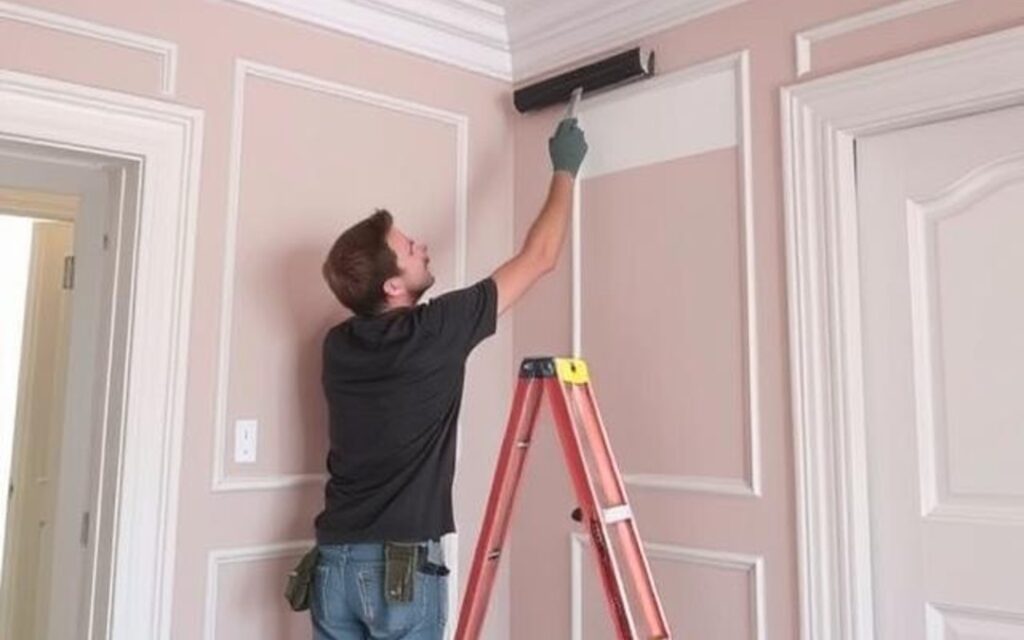
A solid painting quote isn’t a one-line number on a scrap of paper. It’s a written specification of exactly what’s getting done.
What a Detailed Interior Painting Quote Should Include
Every legitimate NJ painting quote contains:
- Contractor’s NJ HIC license number (NJHIC#…)
- Proof of liability insurance
- List of rooms and surfaces included
- Number of coats per surface
- Paint brand, product line, and sheen for each surface
- Prep work scope (patching, sanding, priming)
- Color count (changing sheen or color in some rooms?)
- Estimated start date and completion timeline
- Total price with tax, plus payment schedule
If three of those are missing, the quote isn’t really a quote — it’s a guess.
Red Flags in Low Painting Estimates
Watch for these warning signs:
- "One coat" promises on previously unpainted or patched walls
- No license number on the estimate
- Verbal-only quotes with no written breakdown
- 50% deposit demanded before any work starts (NJ law caps initial deposits in many cases)
- "Cash discount" pricing that suggests the work is being done off the books
- Vague paint specs like "premium paint" without a brand name
- No mention of prep work or surface assessment
Why the Cheapest Quote Rarely Delivers the Lowest True Cost
The lowest bid usually means one of three things: the contractor is undercharging because they’re inexperienced, the scope of work is incomplete, or the prep is being skipped.
All three lead to the same outcome — paint that fails inside two years and a callback fee that erases the original “savings.” The middle quote is often the honest one.
Eight Questions to Ask Before Signing a Painting Contract
- What’s your NJ HIC license number?
- Are you carrying current liability insurance?
- How many coats are included on walls, ceilings, and trim?
- What primer will you use for the substrates in my home?
- Will the same crew be on-site every day until completion?
- How do you protect floors and furniture during the job?
- What’s your warranty on workmanship?
- Who handles cleanup and paint disposal?
Honest contractors answer all eight in clear language. Evasive answers tell you everything you need to know.
7 Ways to Reduce Interior Painting Cost Without Cutting Quality
Saving money on a painting project doesn’t mean accepting bad work. Smart homeowners reduce cost by reducing labor — not by skipping prep.
- Bundle multiple rooms into one project. Setup, drop cloths, and travel are the same whether the painter does one room or four. Bundling drops your effective per-room price by 10% to 20%.
- Clear rooms before the painter arrives. Empty rooms paint 30% faster. Move furniture, take down wall art, remove curtains, and pull off outlet covers yourself.
- Choose mid-grade paint over premium where the surface allows. Bedrooms and dining rooms don’t need the same paint as bathrooms or kitchens.
- Avoid dramatic color changes. Going from dark walls to white usually requires a third coat. Staying in the same color family saves a coat of labor.
- Schedule in the painting off-season. January through March is the slow season for most NJ painters. Winter scheduling can save 10% to 15%.
- Get three itemized written quotes. Comparing line items — not just bottom-line prices — reveals where the real differences are.
- Combine painting with drywall repair as one project. If walls need patching, hiring one contractor for both jobs is cheaper than coordinating two separate trades.
How Long Does Interior Painting Take in an NJ Home?
Time matters as much as money on most projects. Here’s what to plan for.
Single Room Timeline
A standard bedroom or bathroom takes 1 to 2 days. Day one: prep, patch, prime, first coat. Day two: second coat, trim, cleanup. Larger rooms with ceilings and trim sometimes spill into a third day.
Whole-House Interior Timeline
A whole-house repaint of a 2,000-square-foot home takes 3 to 7 working days with a two-person crew. Three-story homes, vaulted ceilings, and heavy prep can stretch that to 10 days or more. Rooms get painted in sequence so you can usually still use most of the house during the project.
Drying and Recoat Times for NJ Humidity
Latex paint dries to the touch in 1 to 2 hours but needs 4 to 6 hours before a second coat — longer if the air is muggy. South Jersey humidity often pushes recoat time to 6 to 8 hours during summer. Trying to recoat too early causes adhesion problems and visible streaks once the wall fully cures.
Best Time of Year to Paint Interior of a Home in NJ
Interior painting in NJ runs year-round, but humidity below 50% produces the cleanest cure and the most reliable scheduling. That makes January, February, and March the technical sweet spot.
Humidity, Temperature, and Cure Time in South Jersey
Indoor temperatures should sit between 60°F and 85°F during painting and for at least 48 hours afterward.
Most NJ homes are climate-controlled enough for this to be a non-issue. Humidity is the bigger variable — running a dehumidifier during summer painting projects keeps cure times predictable.
Off-Season Scheduling Discounts
January through March brings off-season pricing for most South Jersey contractors. Crews want to keep working through the slow months, and many offer 10% to 15% discounts to fill the schedule. If your project isn’t urgent, winter is the smart booking window.
How to Verify a Licensed NJ Painting Contractor
New Jersey requires every home improvement contractor to register with the Division of Consumer Affairs under N.J.S.A. 56:8-136. The license number starts with “13VH” and is required on all written estimates, contracts, and advertisements.
Looking Up an NJ Home Improvement Contractor (HIC) License
You can verify any NJ contractor’s license at the New Jersey Division of Consumer Affairs license verification portal. Search by business name or HIC number. The lookup shows whether the license is active, suspended, or expired.
Insurance and Bonding Verification
Ask for a certificate of insurance (COI) before work begins. A legitimate contractor will email it within a day. The COI should show general liability coverage of at least $500,000 and list your address as the project location.
What "Licensed, Bonded, and Insured" Actually Means in NJ
- Licensed means registered with the state under N.J.S.A. 56:8-136 (HIC number).
- Bonded means a surety bond protects you if the contractor fails to complete the work as agreed.
- Insured means liability insurance covers property damage and injuries during the project.
For reference, Mackenzie Contracting LLC is licensed under NJ HIC #13VH12847300, fully bonded, and insured for every project we take on.
Interior Painting Cost FAQ — New Jersey Homeowners
How much does it cost to paint a 2,000 sq ft house interior in NJ?
A 2,000-square-foot interior repaint in NJ typically costs $3,500 to $7,500 for walls only with two coats. Add ceilings and trim, and the range moves to $5,500 to $9,000. Heavy prep, color changes, or older homes with lead paint considerations can push higher.
Is it cheaper to paint or wallpaper a room in NJ?
Painting is usually 30% to 50% cheaper than wallpaper for the same room. Wallpaper material costs more per square foot, and installation labor is higher because of pattern matching and seam work. Painting also lasts longer between refreshes.
Do NJ painters charge by the hour or by the room?
Most NJ painting contractors quote flat rates per room or per project for jobs over a few hundred dollars. Hourly billing ($40 to $75/hour) shows up mostly on small punch-list work, touch-ups, or single accent walls.
How much does it cost to paint kitchen cabinets in New Jersey?
Kitchen cabinet painting in NJ costs $1,500 to $4,500 on average. Small kitchens with 10–15 doors price near the bottom; large kitchens with 30+ doors plus drawer fronts price near the top. The job typically takes 4 to 7 days because of cure time between coats.
Do I need lead paint testing if my NJ home was built before 1978?
If your contractor will disturb more than six square feet of paint per interior room, federal EPA RRP rules require lead-safe work practices on pre-1978 homes. Testing is the first step. Skipping it isn’t optional for a licensed contractor.
Get a Free Interior Painting Estimate in South Jersey
If you’re weighing an interior painting project in Egg Harbor Township, Northfield, Linwood, Somers Point, Ocean City, Ventnor, Margate, Longport, Brigantine, Absecon, Galloway, Mays Landing, Marmora, or Port Republic, I’d be glad to walk through your home and put together a written estimate with no obligation.
Every quote includes a full prep scope, exact paint specifications, coat counts, and timeline. No guesswork, no upsells, no surprises on the final invoice.
Mackenzie Contracting LLC NJ HIC #13VH12847300 Phone: (609) 412-7764 Free Estimate: Request a Free Quote
The walls in your home should look as good as the rest of the place. Let’s make that happen.